
Before reading this blog, you may choose to read Occitania Part 1: Carcassonne and the fate of Occitania and Occitania Part 2: The Cathars in Southern France.
* * *
A short 30-minute drive west of Carcassonne lies the village of Fanjeaux. Before the Albigensian Crusade in 1209, Fanjeaux and the surrounding area had already been a battleground: not with sword and arrow, but with scripture and debate. The Crusades, then, represented the second prong of attack in a war against heresy. A more subtle combat, one to win hearts and minds, or souls as it were, was in play earlier.
At the beginning of the 1200s, a Catholic priest from Spain, named Dominic de Guzman was travelling through Occitania. He is purported to have met some Cistercian monks on the road tasked with countering the growing Cathar heresy. After the meeting, Dominic apparently felt the Cistercians were a poor match against the Cathars: the monks seemingly had too much pomp and lacked humility. This contrasted with the Cathar parfaits, who lived and travelled simply, renouncing materialism. Dominic decided he was the man who, through example, could more effectively preach to the people of Occitania and turn the tide against Catharism.
Whether the story is true or not, we don’t know. But Dominic set out to model his life on the same asceticism as his Cathar counterparts. He abandoned finery and embraced poverty, living an austere life devoted to prayer and preaching to the people of Occitania, trying to convert them to Catholicism. Fanjeax became his base of operations.
Dominic did not just engage with Cathar believers, but also with Parfaits – the leaders of Catharism. Through debates and theological discussions, he tried to make the Good Christians return to the flock of the Church of Rome. The extent of his success in converting parfaits is not known, but there are miraculous tales told of how at one gathering with Good Christians, he threw pages of Catholic scripture in a fire and they did not burn away. Instead, though alight with fire, the scripture rose up in the air to the timber beams supporting the roof of the building and burned one of the beams: but the scripture was never consumed in flame. The heretical scriptures of the Cathars did not fare so well, of course. When a parfait threw Cathar scripture into the fire, they were consumed in fire quickly and reduced to ash almost instantly, as the story goes.
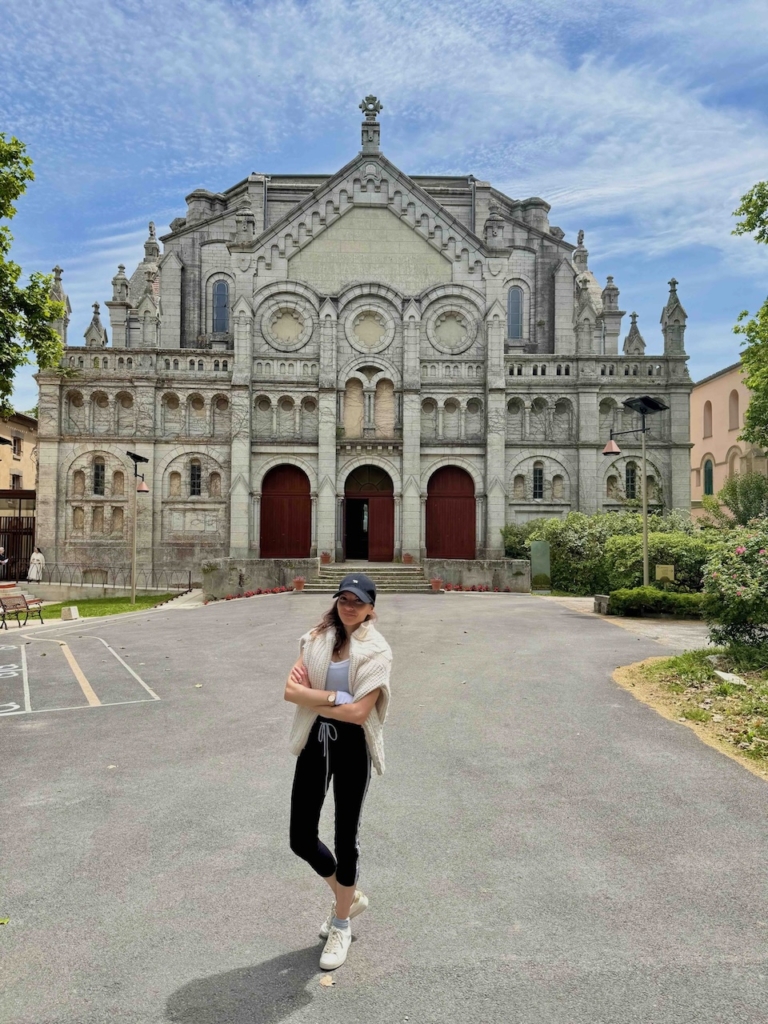
Father Dominic’s work in and around Fanjeaux led to some conversions from adherents to the Cather faith. And he took it upon himself to ensure that young women who renounced their heretical views were looked after. The monastery of Prouilhe, just outside of Fanjeaux, was founded in the 13th century to house and care for Cathar women who returned to or discovered the Catholic faith. This was necessary since women who turned their back on Catharism risked rejection and ostracization from their families and communities. Equally true, however, is that once Dominic achieved a conversion, he likely wanted the convert to minimize contact with her heretical community.
The current Prouilhe Monastery is of 19th century construction. The old buildings and monastery were in a state of disrepair for hundreds of years. Today, Prohilhe houses some 30 nuns that live in a life of prayer and contemplation and offer outreach workshops, lectures and retreats to those interested in prayer and reflection.
* * *
Late in the morning, we arrive in Fanjeaux and park our car just off the main road. We walk the narrow medieval streets up to the centre of the town. Fanjeaux is a modest place, and perhaps because it is not the main tourist season, it feels almost deserted save for a resident walking a dog. The main church (Église Notre-Dame de l’Assomption de Fanjeaux) is closed for restoration work.
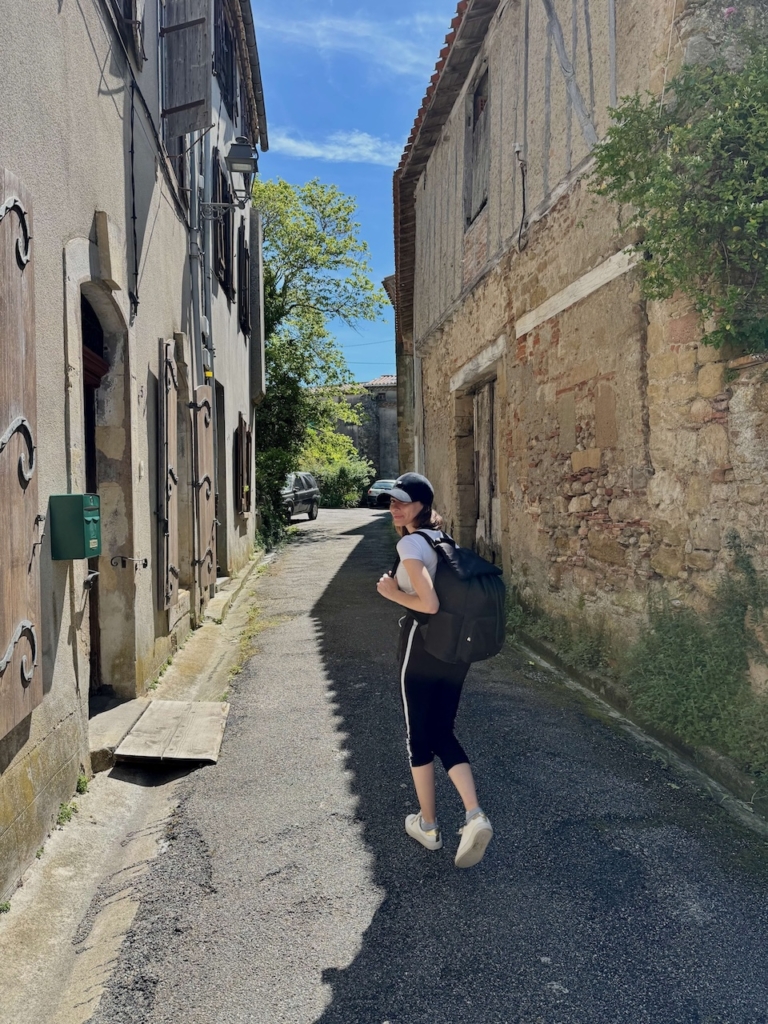
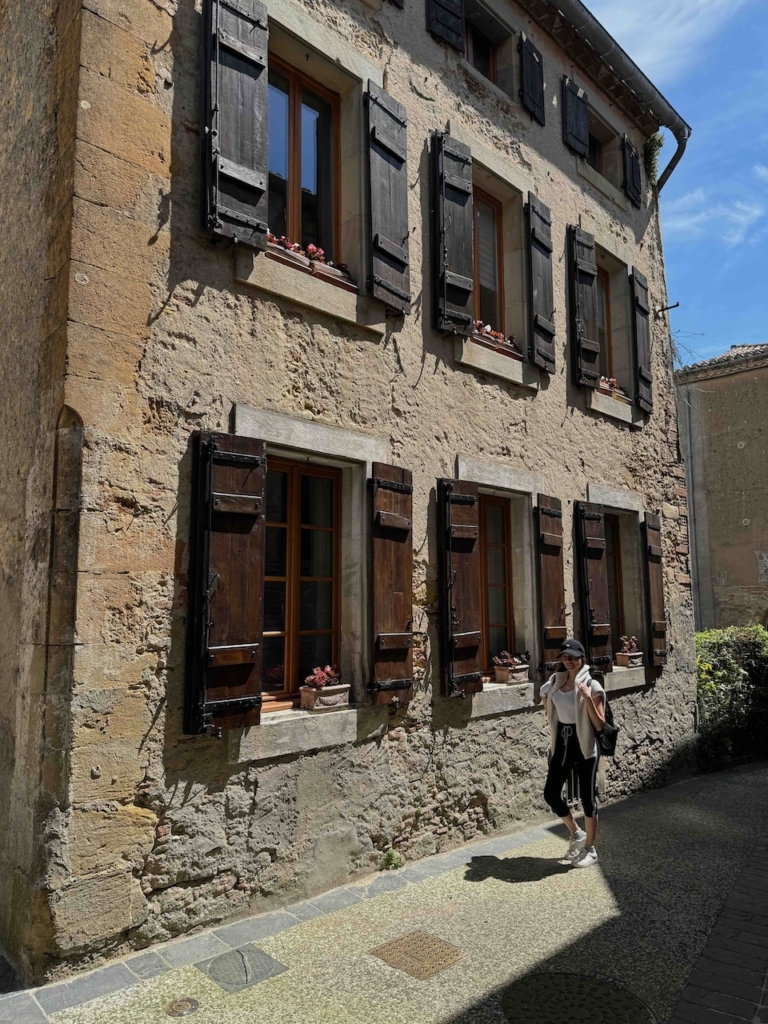
We don’t need much time to walk the entire town – it’s small. When my wife observes a well-preserved stone building with orangish shutters, we know that we have come across the landmark thought to be the house of Father Dominic de Guzman when he lived in Fanjeaux some 800 years ago between 1206 and 1216. It too, is closed. But there are days it is open and people can visit a chapel and prayer room. Perhaps we could have organized our visit better to line up with one of these openings, but it would take more planning than we were willing to put into the venture.
As we continue to stroll around the streets, one empties us out at a glorious view of the Lauragais Plains. In the distance, the Pyrenees mountains, still wearing their snow coverings, rise up.
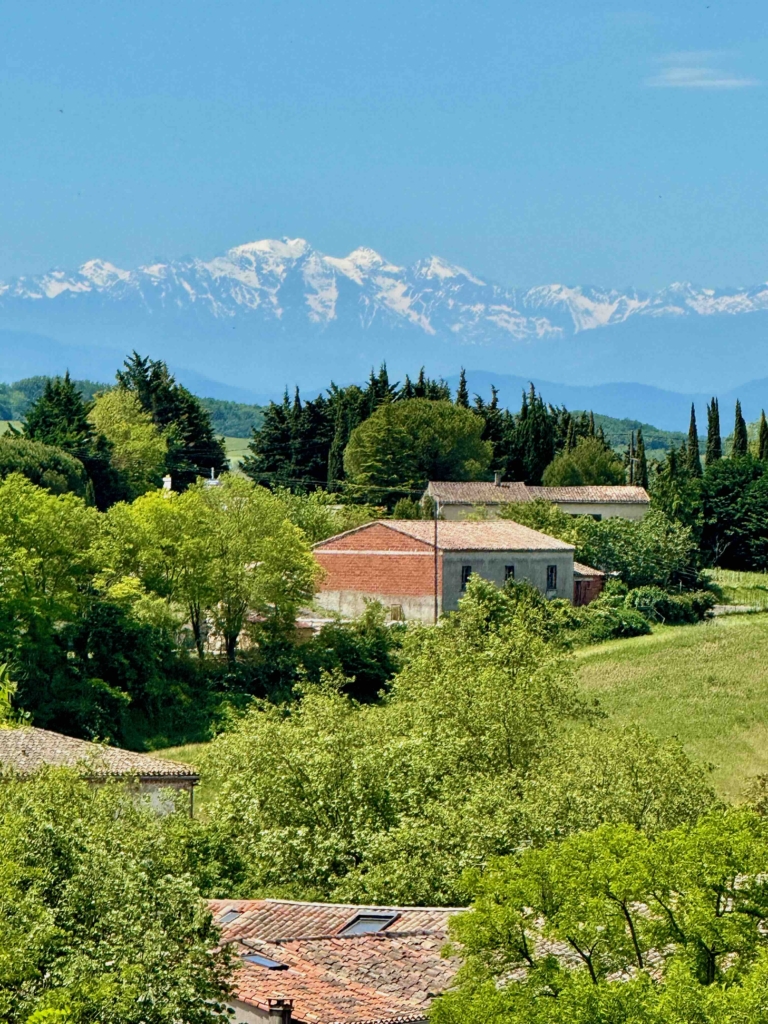
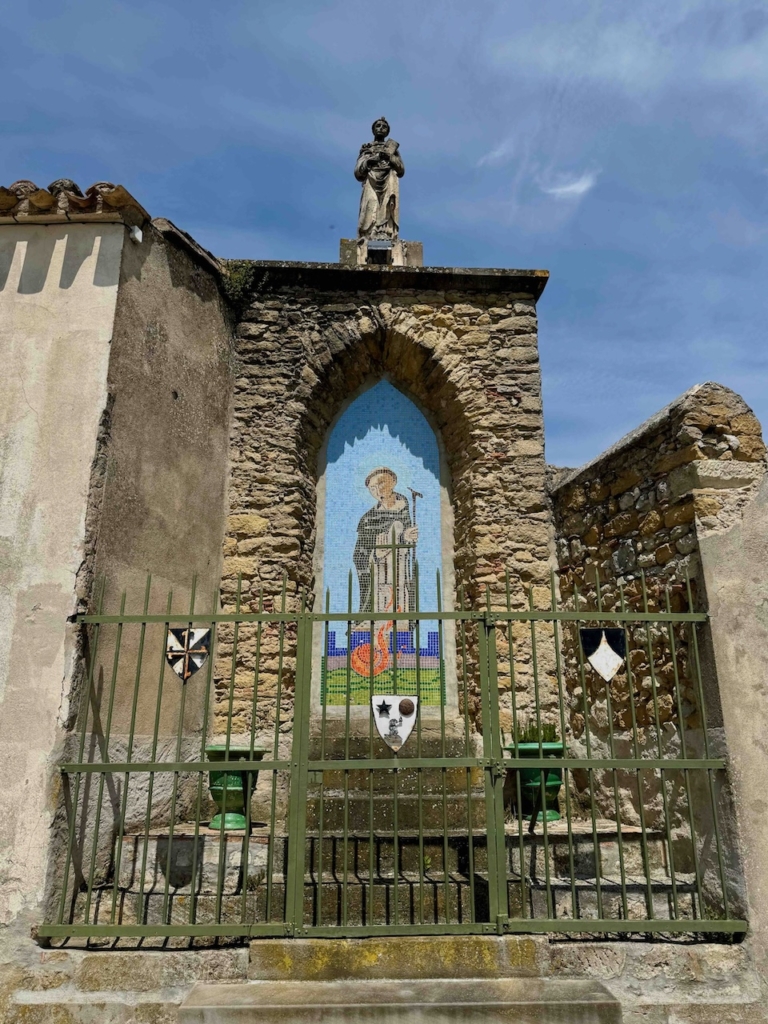
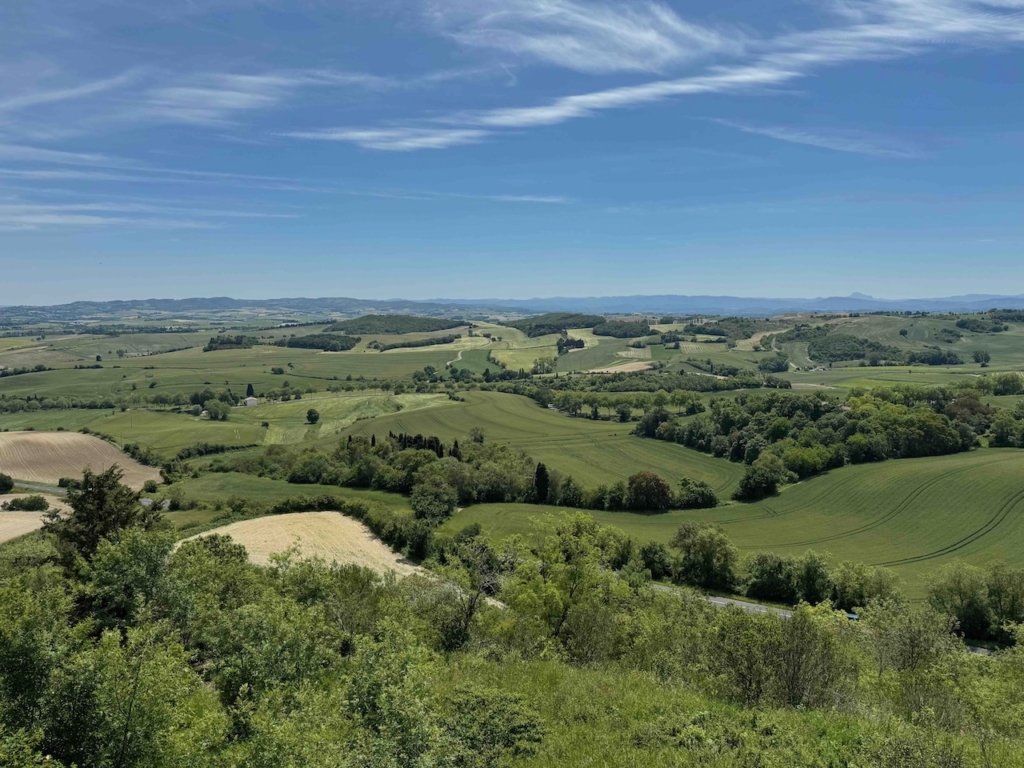
From this lookout, one can appreciate the defensive advantage of Fanjeaux atop the hill with its clear line of sight for miles in all directions. In the Medieval era, walls and height were the key to safety. Even here, Fanjeaux still celebrates its connection with Dominic de Guzman with a statue of the priest and a cross: they overlook the valley where the priest trod preaching the Catholic church’s version of salvation.
* * *
Dominic de Guzman must have felt his preaching efforts (and that of his followers) were not gaining sufficient traction amongst the inhabitants of Occitania. Legend has it that, in a fit of sadness and despair at his progress, he went to pray at the Monastery of Prouilhe. There, the virgin Mary appeared to him and gave him prayer beads as a tool to use in restoring the Catholic faith of the region. The practice of using prayer beads – beads on a rope used by the faithful to count prayers – had existed for a long time, but Dominic is credited with popularizing it in Southern France and beyond. We refer to these beads today as the Rosary.
Reestablishing Catholicism in Occitania seemed to take a better turn for Father Dominic after his visitation by the Virgin Mary. But I would be remiss to not observe the success of his efforts coincided with the arrival of the Crusaders. Dominic’s commitment to debate, and persuasion to help people ‘see the light’ ran parallel to a Crusading effort trying to stamp out heresy while taking control of Occitania. And although Dominic might have preferred guiding the region to the true church by words alone, there was an army present helping people navigate their faith through a more punitive means.
Dominic did become friends with Simon de Montfort, the leader of the Crusading army. In fact, Dominic was present at the decisive battle of Muret where the Crusaders, though greatly outnumbered, defeated an Occitania army in 1215. This decisive victory effectively ended Occitania’s independence and autonomy. Montfort attributed his success to the prayers of Dominic de Guzman.
Dominic would later travel to Rome in 1216. The community he had established in Occitania, with its commitment to a simple and ascetic life filled with prayer and preaching, was recognized by the Pope. And in Rome, Dominic was granted permission to form the Order of the Preachers. This Order would become what we refer to today as the Dominican Order.
Dominic de Guzman died in Italy in 1221. By 1234, he was canonized as St Dominic, the patron saint of astronomers and natural scientists.
Unfortunately, after his death, his Order was later employed for a more zealous and severe purpose. In the mid-thirteenth century, the Dominicans were seconded by the Inquisition to stamp out heresy with more than just persuasion and debate. The Dominicans conducted tribunals that could sentence people to different punishments – and I am sure we have all heard of the methods of torture that could sometimes be used to extract confessions. It seems it didn’t take long for the Dominican Order to forget the ways of its founder.
Today, the Dominican Order follows the precepts of St Dominic and has between 5,000 and 9,000 members that preach and pray throughout the world. It is quite a legacy, and one that began in the hilltop town of Fanjeaux in the South of France during a time of political change.
* * *
Down the road from Fanjeaux is the busy town of Mirepoix. Unlike Fanjeaux, it bustles with people and even tour buses. Mirepoix has a tourist infrastructure – hotels, guest houses, and plenty of restaurants.
As we drive into Mirepoix, we immediately notice the grid-like layout of the streets. This is a bastide town: the medieval equivalent to urban planning. In addition to square blocks of housing and streets, bastide towns also have a central square with covered arcades – the market, commerce, and economic heart of the town. After parking our car and checking in at the guesthouse, we stroll to the main draw of Mirepoix – the Place des Couverts (the covered area) or the town square.
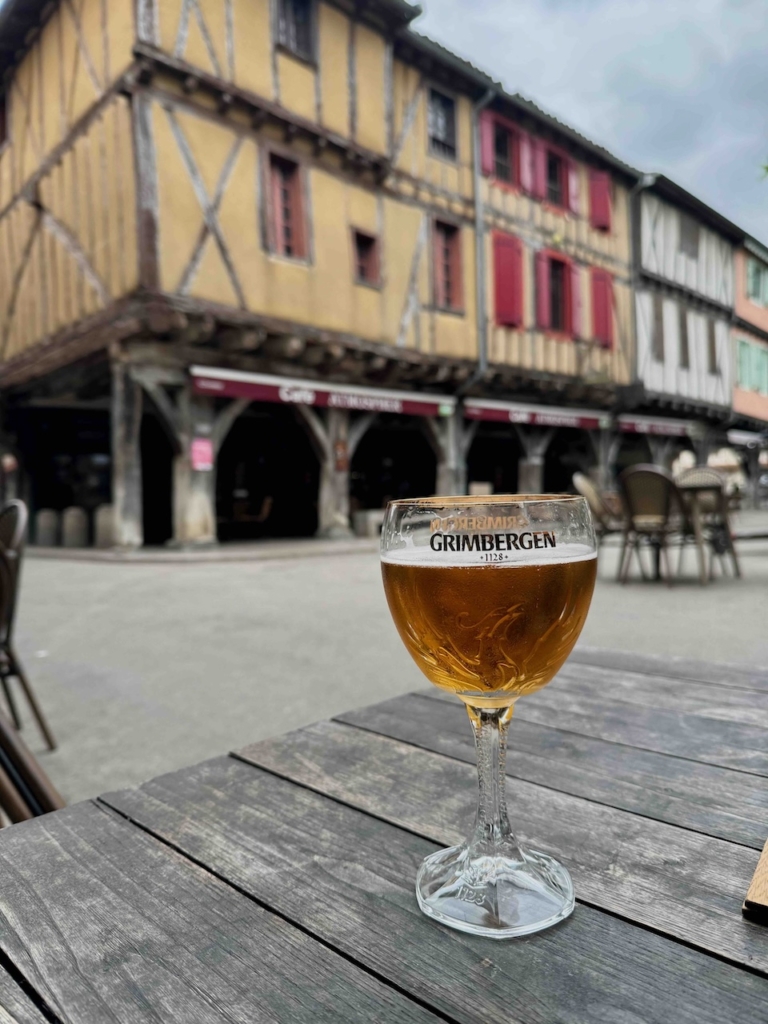
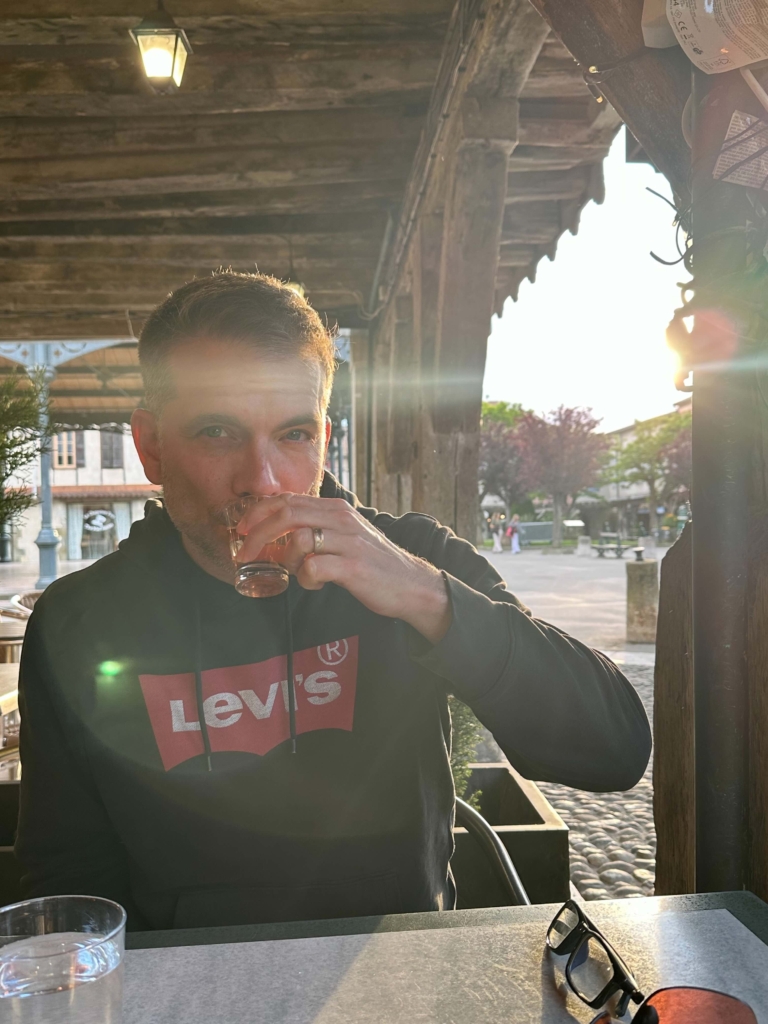
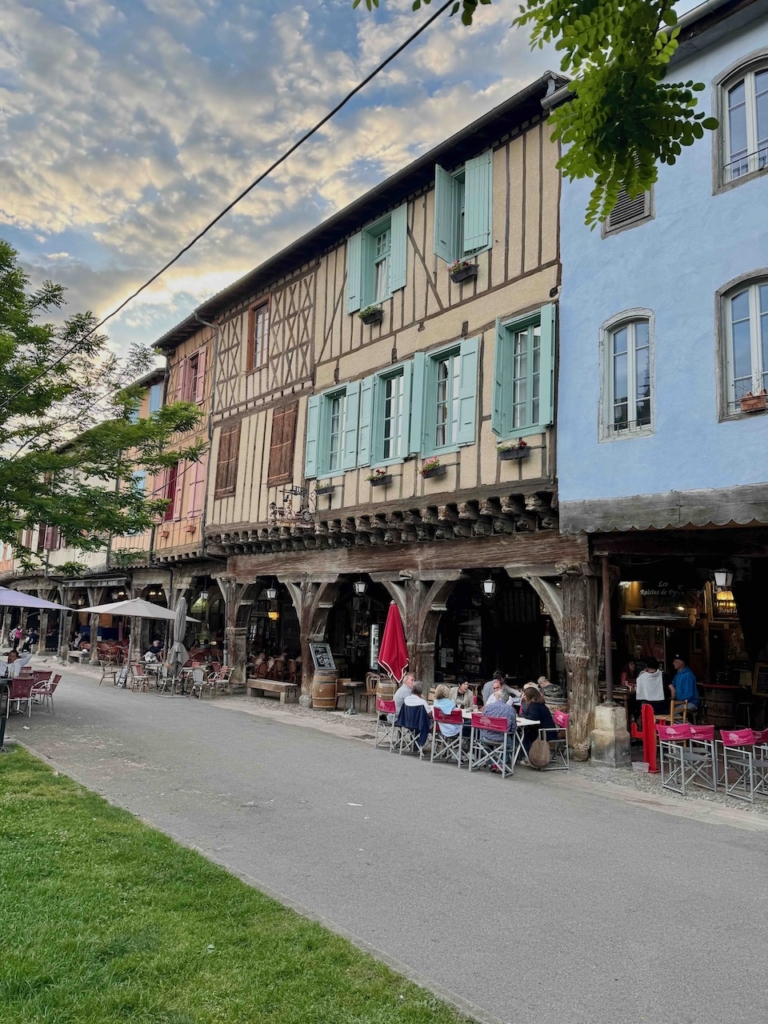
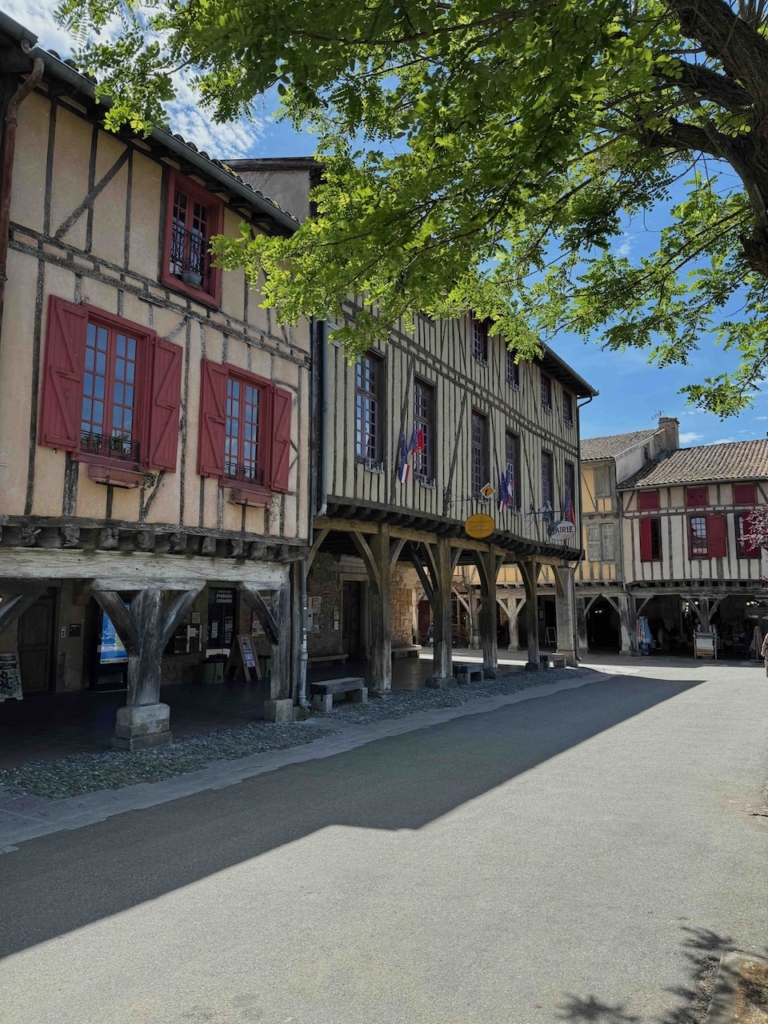
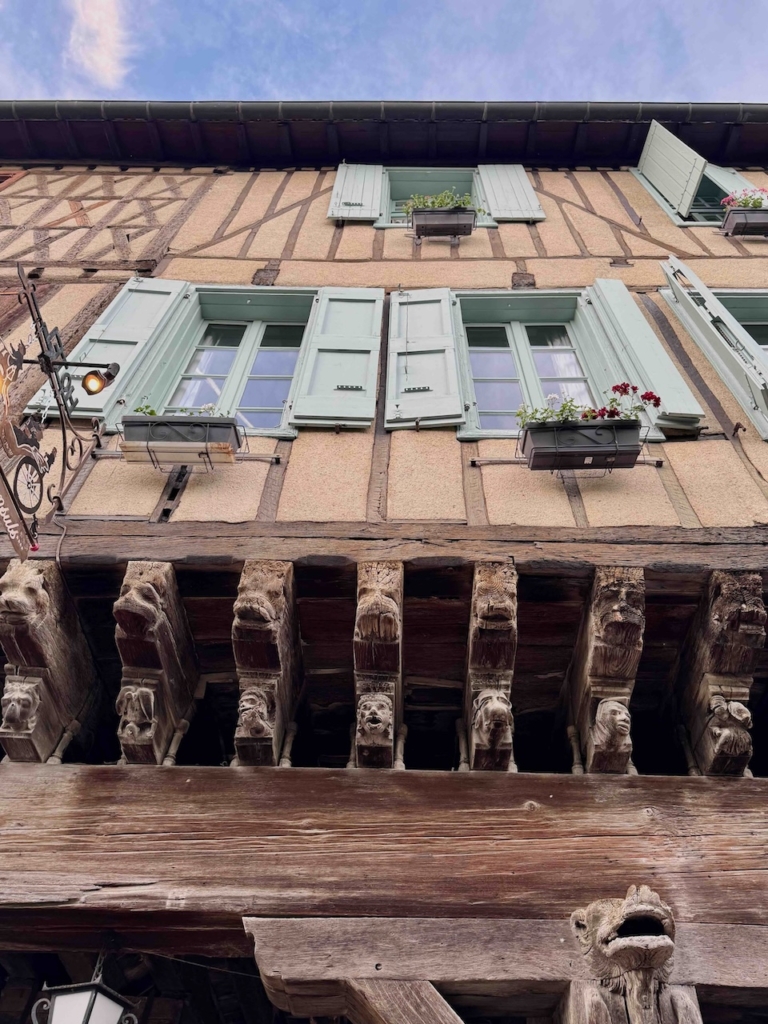
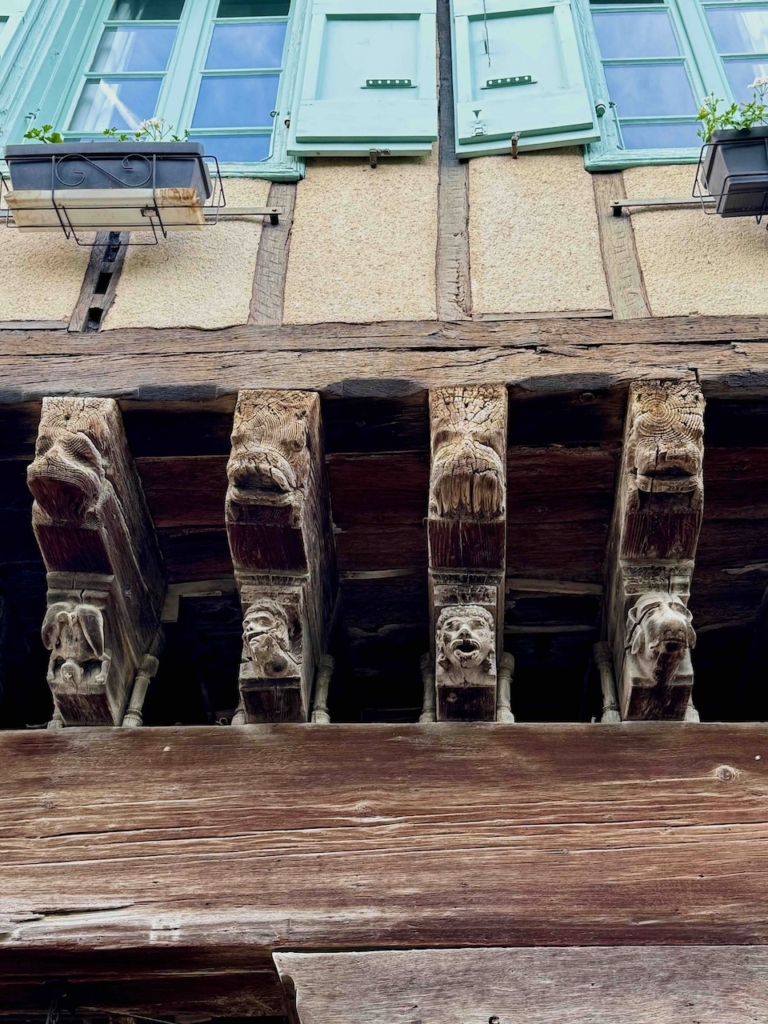
The square is really quite pleasant with its colourful facades and shutters and its old timber-roofed covered walkways. All around in the arcades are small shops and restaurants catering to shoppers and diners. We eat tapas – yes, this may be a medieval town, but the cuisine is modern – and enjoy watching life in the square and the busy lines at the gelato and ice cream vendors. There is one building in particular that draws the most eyes, and that is the Consul House. Now a hotel and café, this was used by local officials back in medieval times. Unlike most of the other timber beams in the arcade that are unadorned, the Consul House beams are elaborately carved into a medieval circus of characters: animal faces, contorted human ones, and sometimes a cross between the two.
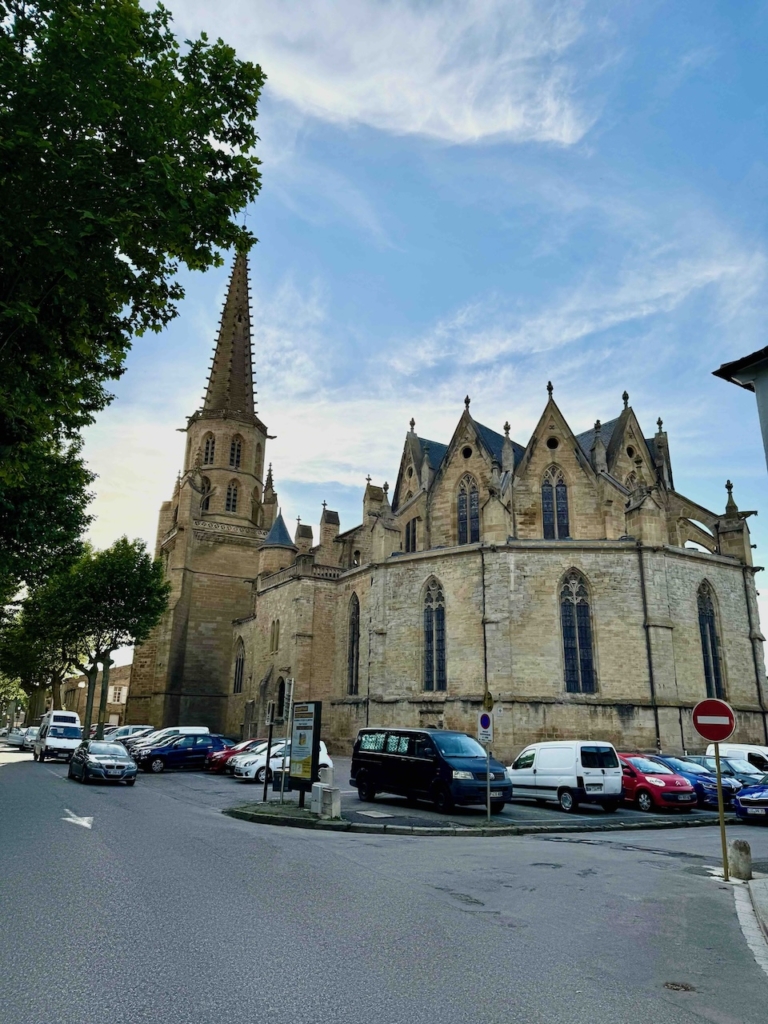
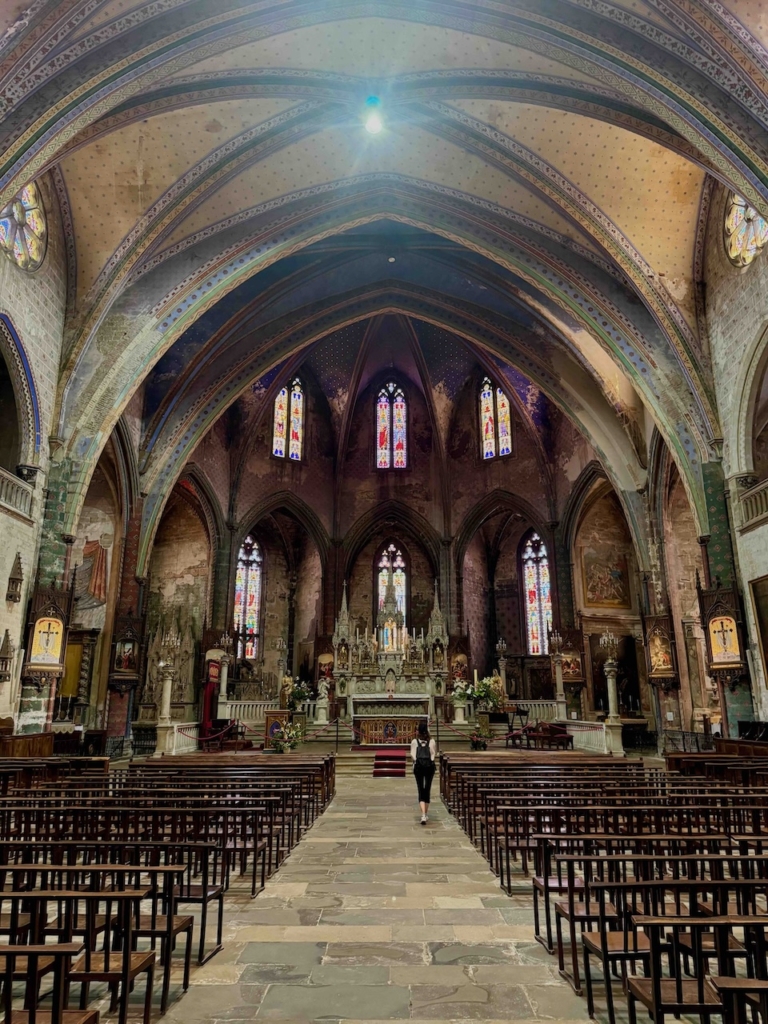
We linger enjoying our early dinner and drink just long enough to ensure we can still get in to the medieval Saint-Maurice Cathedral. Right beside the town square, the cathedral is certainly worth a visit, especially because it has the largest single barrel nave in France (the nave is the part of the church where worshipers sit during the mass). When we enter, there are only some 10 people in the church and Gregorian chant quietly plays from some speakers. The day outside is still bright, so the sun filtering through the windows lightens up and softens the cold stone while making the stain glass colours pop. Somehow, the effect is to make the place feel welcoming, which is not always achieved in cathedrals, which often are designed to inspire awe, but not necessarily comfort. I sit in a pew. I have found one of those rare moments where my mind has stopped chattering. We don’t leave for another 30 minutes until it’s closing time.
* * *
In the early 1200s, a meeting of hundreds of Cathars took place in Mirepoix to discuss what must have felt like a dark cloud coming their way. Though the Albigensian Crusades had not yet started, these Cathars seemed to have a sense of a looming danger, a foreboding of what was to come. They sought assistance from the local rulers and petitioned for the use and control of a small fortress, called Montsegur, in the foothills of the Pyrenees. The rulers, sympathetic to the Cathar faith, granted the request.
I suppose there was hope – hope that in an isolated location, protected by castle walls, the people would be able to ride out whatever events happened in the rest of Occitania. Hope that, in a little corner of the kingdom, tending only to themselves, the storm on the horizon would pass. Is this not a common refrain in history? How often have different peoples across countries all over the world believed that, if they can retreat to some remote place they can evade trouble?
By the 1230s, the Cathars in Occitania were on the run and living in fear. The Crusading French army had mostly seized control of the region, and all the main cities and towns sympathetic to the Cathars had fallen. Montsegur was the last Cathar stronghold. Outside its fortress walls, a small village had grown to some 500 people.
Hope the Crusaders would leave the Cathars alone to eke out their living vanished in 1243. After some Cathar-aligned men from Montsegur attacked and killed French Inquisitors, the French army arrived and laid siege.
* * *
The morning is cloudy when we leave our lodging in Mirepoix. Initially, forests and farmland are on either side of us as we drive further south. But after 20 minutes, a misty rain begins: rocky outcrops rise and the road winds. We are in the foothills of the Pyrenees. Eventually, hills become tall and topped with grey rock – small mountains. Some of the summits are concealed in bland grey clouds and sky.
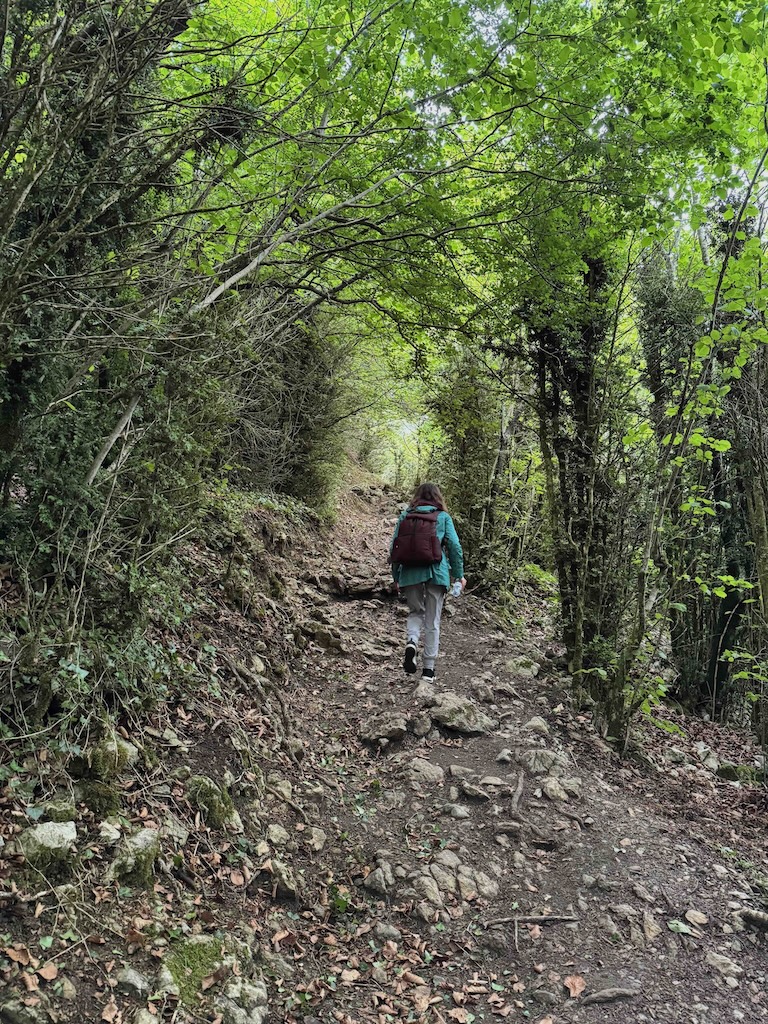
We turn off the highway and ascend toward our destination. When we arrive at a simple, well-maintained Visitor Centre and parking lot, we get out of the car and stare at a small mountain. There is no evidence of the Montsegur fortress ruins at the top. Unfortunately, the visibility is poor, though we know the object today’s journey it is somewhere up there. With the admission fee paid to use the trail, we begin a not too strenuous hike upward.
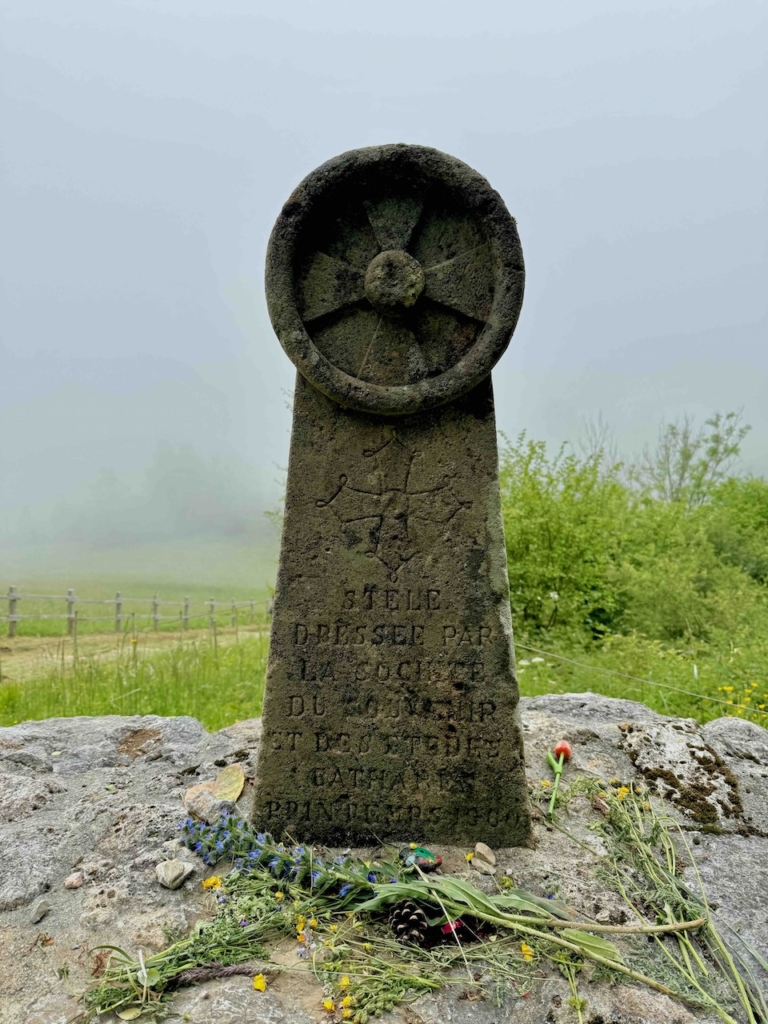
The trail ascends up a grassy hill that meets a forest. There is a monument here with a cross on a disk at the top. It commemorates the Field of the Burned, named after the Cathars who chose death over conversion. Though the siege of Monsegur began in 1243, it was long and lasted 10 months. It ended in March of 1244 when the Cathars inside the stronghold surrendered. As with Minerve, the French army was more restrained and avoided a massacre. But they also demanded what they had in the past: conversion to the Catholic faith and the renunciation of Catharism. And also as with the town of Minerve, many Cathars converted to save their lives and to be with family. But about 200 believers and Parfaits refused to recant. They were walked down to a field where they chose to be burned alive for their beliefs.
We continue our journey upward, through a steep forest trail and then onto a rocky slope and zig-zag steps. Still, a view of the fortress eludes us until at last we see the great outer walls, and then the main gate of Montsegur shrouded in mist.
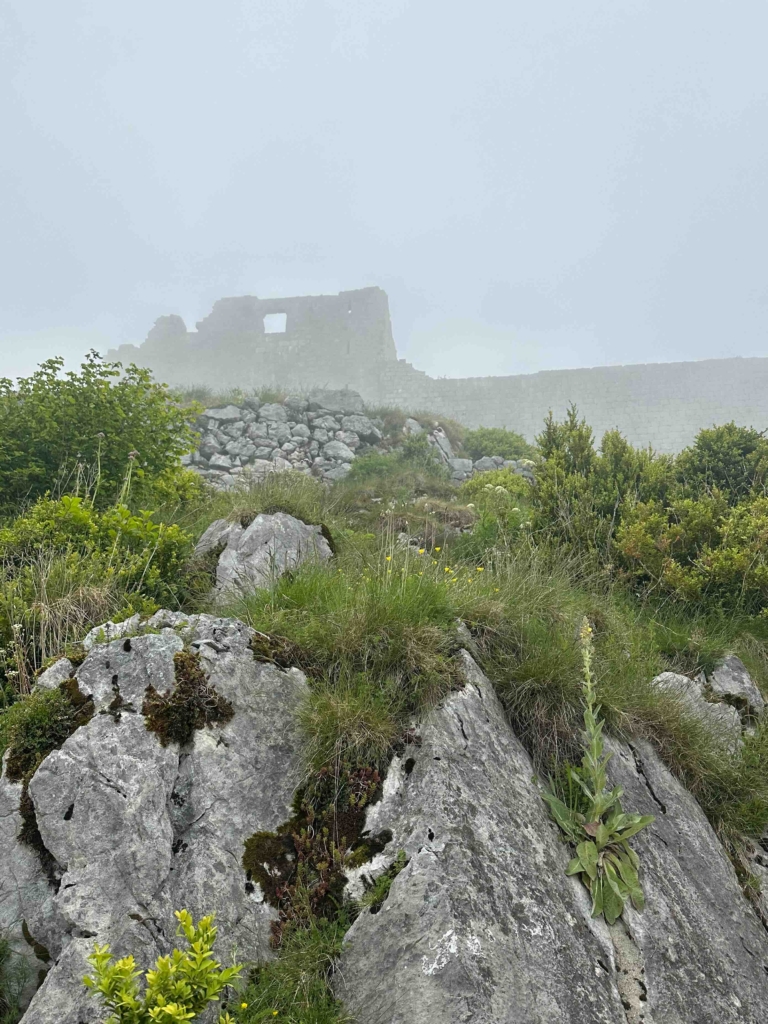
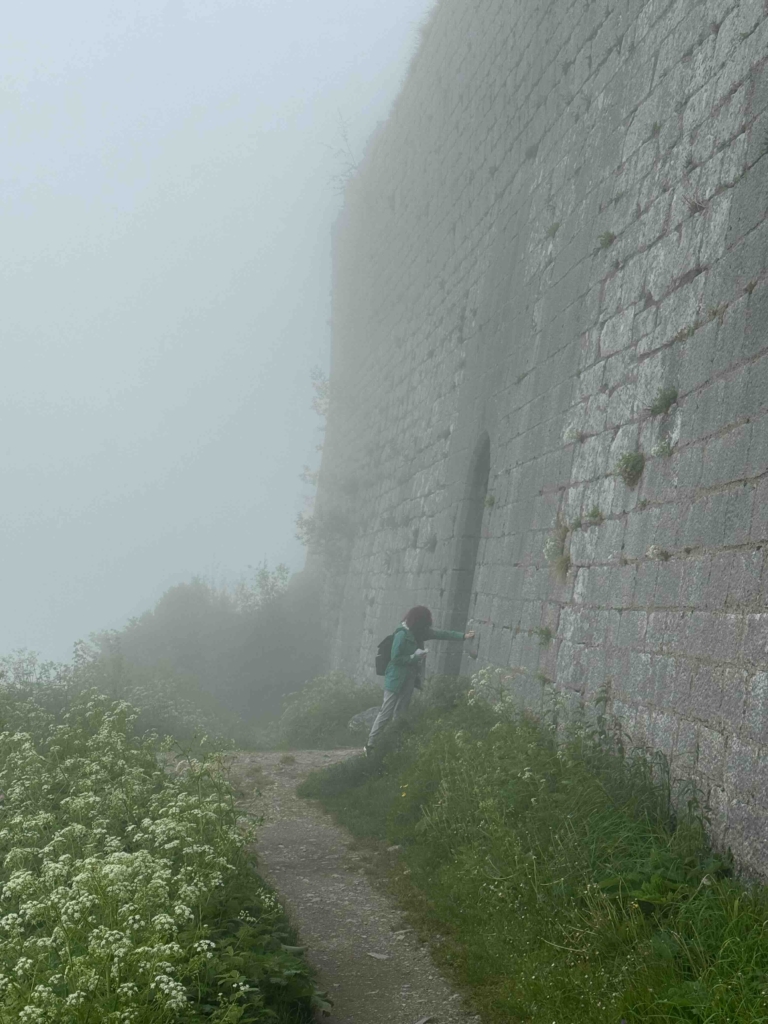
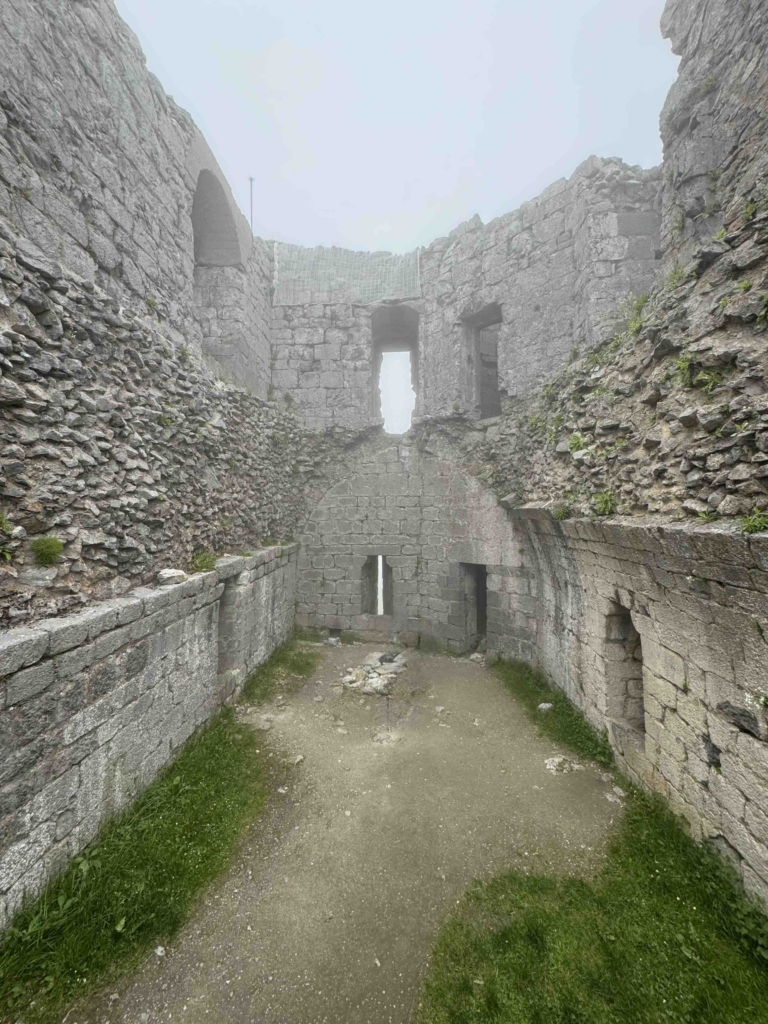
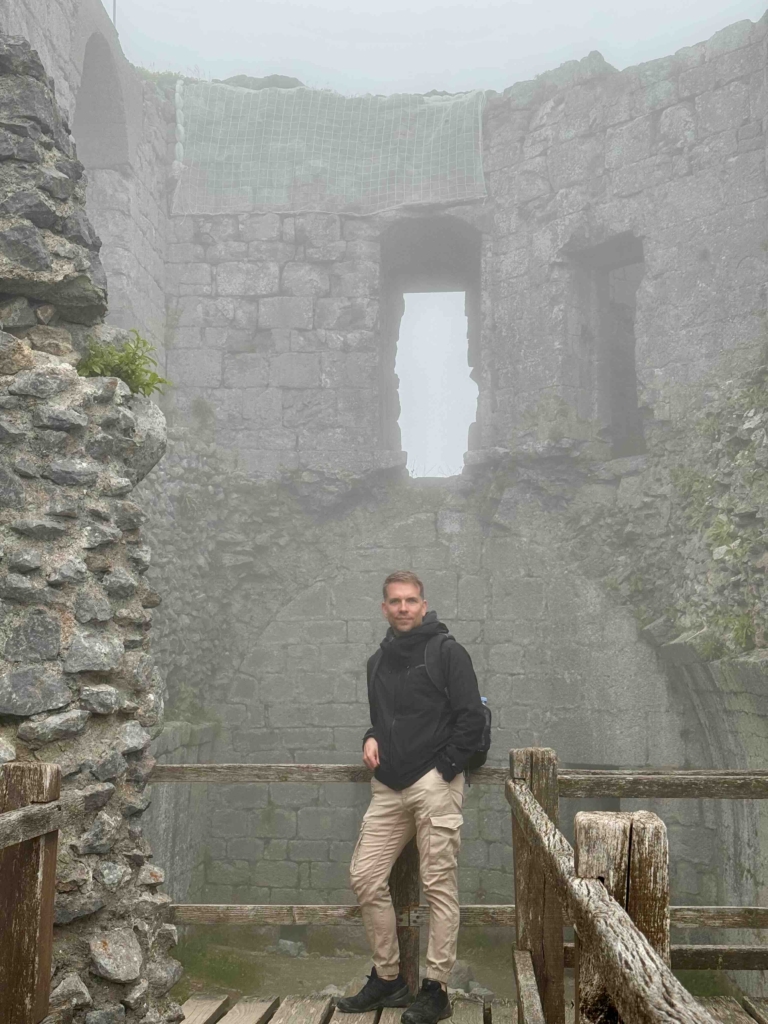
This is not the original fortress used by the Cathars. After the French forces captured it, the French Crown reinforced and expanded the structure. This does not detract from the place in any way, for it is all ruins now, and modern fancy or imagination as it envisions what happened here 800 years ago cannot distinguish between stone that is old and that which is older. Perhaps it is the overcast weather and mist, but there is an obvious feeling of gloom that hangs over the place. You can sense it as you walk about the walls and in the spaces within the shell of the fortress. Our mood is solemn.
I remark to my wife that we are not able to see any of the big views of the valley and surrounding mountains. “Too bad about the clouds,” I say.
Kira seems to be in tune with something otherworldly. She hasn’t shaken the energy here, and she is a little distant when she responds, “It’s what it needs to be and it’s right.”
We hike back down to the carpark at the Visitor Centre and decide to drive to the nearby village. As we descend on the winding road, the cloud cover subsides and the ruins reveal themselves, as if Montsegur has chosen to coyly bid us farewell. For the remainder of the day, the sun peeks in and out, but it doesn’t rain again.
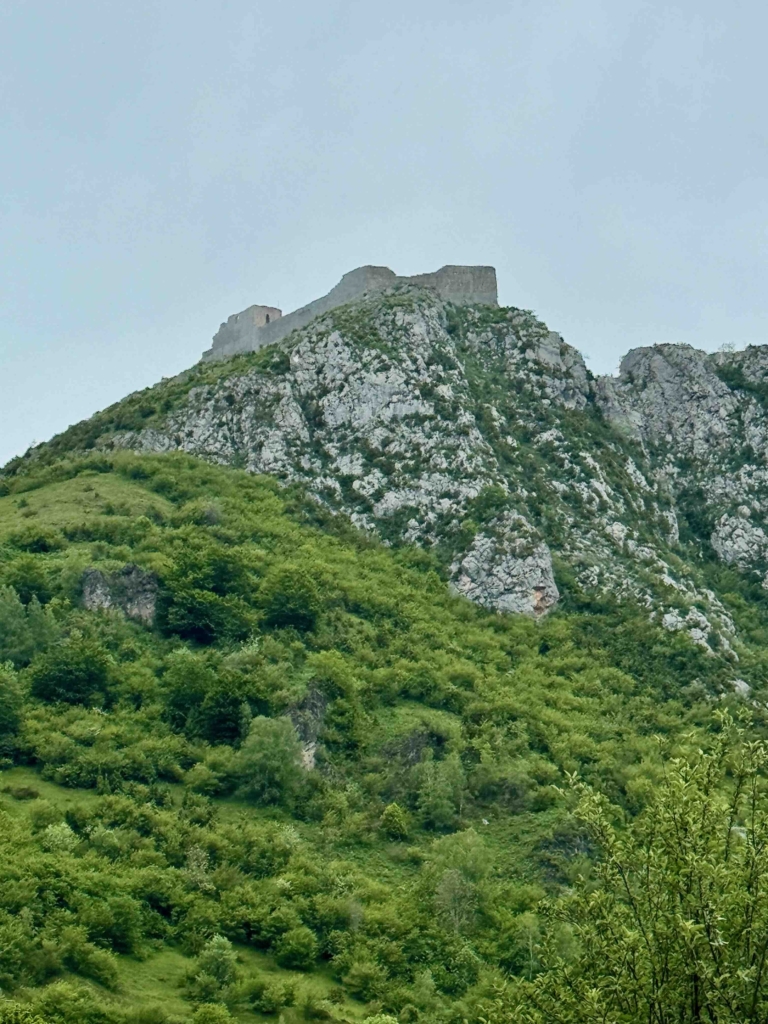
The fall of Montsegur put an end to Catharism in Occitania. The Christian heretical sect never recovered. With the death of so many Parfaits, and remaining believers forced into hiding or flight to other kingdoms (namely Aragon), there was no way the faith could survive. The culture of Occitania changed with French rule, ending the long independence of the region. The Occitan language was diminished while French became the language of culture, politics and law as France sought to unify the area into its existing kingdom.
So, when I say, “I love Southern France,” I am mindful that I am in a region that hundreds of years ago sought to resist being French at all costs. And in this case, it is the history of the forsaken, the defeated, dare I say, the losers, that is most fascinating and wonderful here.
Visca Occitania.